Key Takeaways
- Most DIY and store-bought coatings fail on basement floors due to moisture issues, poor surface prep, and lack of proper adhesion.
- Polyurea base coats with polyaspartic top coats offer the best basement concrete coating available today, combining abrasion resistance, a durable finish, and sleek aesthetics. They won’t yellow with age (epoxy will) and they have enough flexibility to give and take with the expansion of your concrete floored basement.
- Choosing the wrong coating type could lead to mildew growth, peeling paint, peeling coatings, and costly, annoying repairs.
Why Basement Concrete Needs Special Treatment
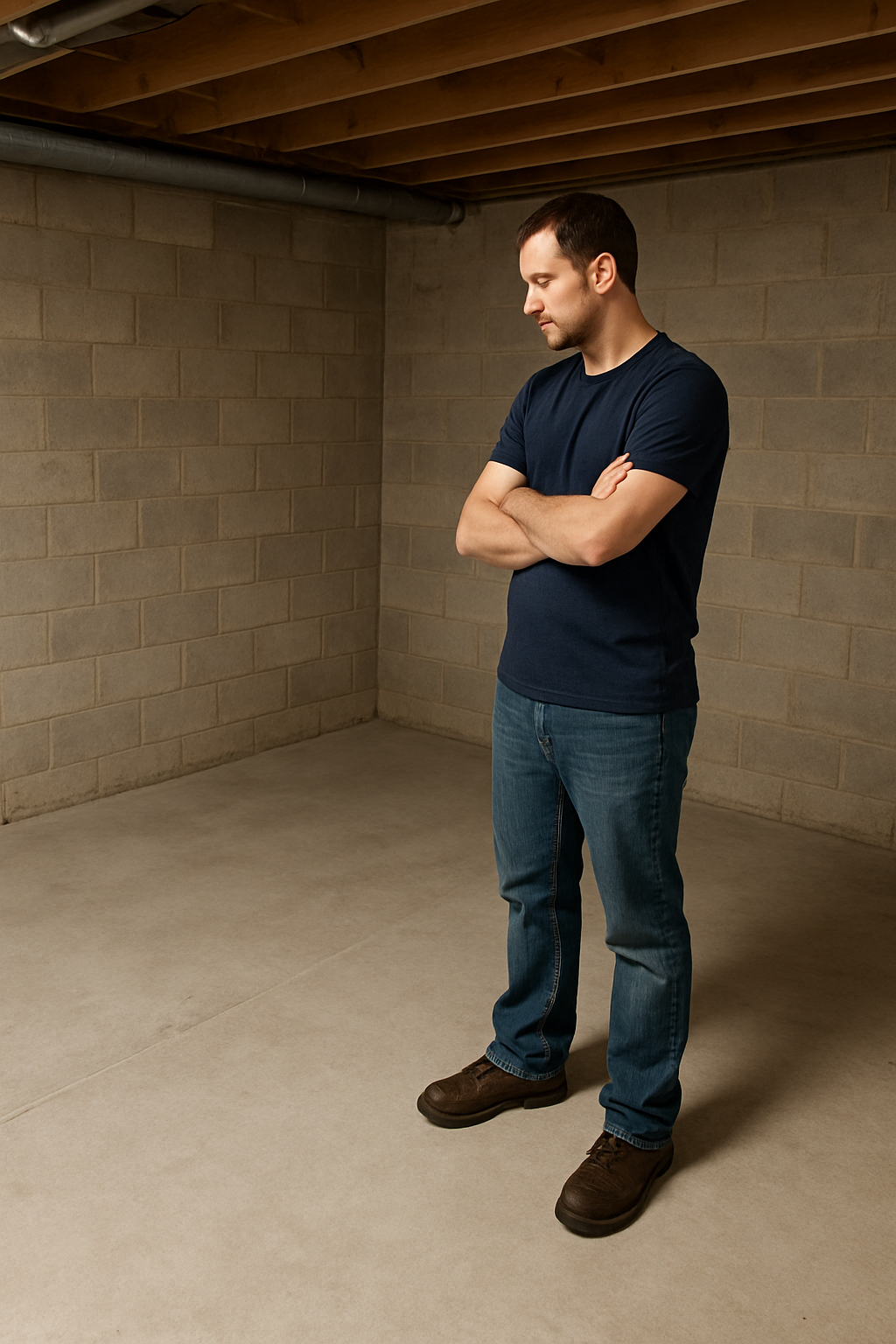
Basement floors aren’t the same as garage floors or outdoor concrete.
They’re often cold, damp, and located in areas with poor drainage or frequent temperature changes. Moisture present in the concrete slab — even moisture that you can’t feel — can wreck a new concrete coating if it’s not completely dry or tested ahead of time. A basement’s primary concern when it comes to the right concrete coating is usually damp concrete, which is why product choice — and professional prep — is so crucial.
The Best Coating System for Basement Concrete: Polyurea + Polyaspartic
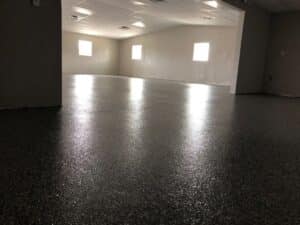
Dream Floors uses a polyurea base coat paired with a polyaspartic top coat — widely recognized as one of the best concrete coatings for basements and one of the best rated concrete coating systems available anywhere. This system delivers:
- Fast 1-day application – Minimizes disruption to your home life so you can start using your basement again right away
- UV resistant and abrasion resistant surface – Maintains its look and performance even in sunny, high-use areas
- Flexibility to handle temperature fluctuations – Prevents cracking and peeling during seasonal changes or unexpected cold snaps
- A tough, protective layer that resists stains and cracking – Keeps your floor looking clean and smooth, even with spills or dropped tools
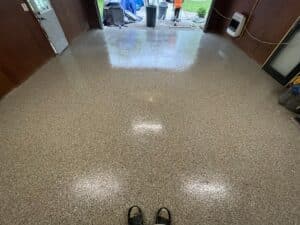
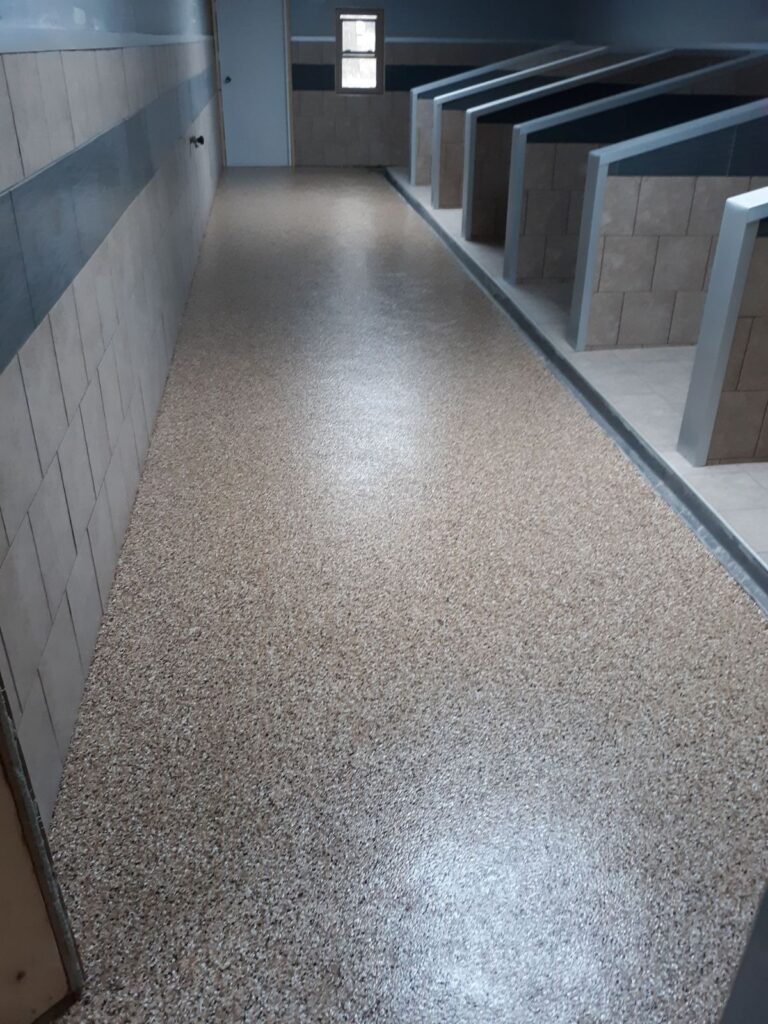
- Optional decorative chips for color, texture, and a shiny finish – Adds a designer touch while improving traction and hiding imperfections
- Long-lasting durability, even with light foot traffic or storage area use – Stands up to real-world use for years without flaking or fading
Unlike traditional epoxy coatings or acrylic coatings, this system holds up to moisture and temperature changes — perfect for a living space below grade. And while garage floors may require coatings built for vehicle traffic, basement floor coating systems must handle subtle ground shifts and constant interior humidity.
The Worst Basement Floor Coatings (And Why They Fail)
Here are the common coating types that sound good but don’t hold up:
- DIY Epoxy Kits: Often water based products with low adhesion. These rarely bond properly, especially on damp concrete.
- Acrylic Paint or Acrylic Coatings: These spreads easily go down but wear out fast. Not meant for heavy foot traffic or basements.
- Cheap Rust-Oleum Kits: These may claim to be self priming or low VOC, but lack long-term abrasion resistance and can’t handle temperature changes.
- Old Epoxy Coatings: They’re rigid, brittle, and easily crack when the concrete shifts.
If you’re coating basement concrete floors, choosing the best finish means knowing what to avoid as much as what to look for.ing basement concrete floors, choosing the best finish means knowing what to avoid as much as what to look for.
Moisture Is The Hidden Enemy of Basement Floors
Moisture is the #1 reason why floor coatings fail in basements.
Without a moisture test, you’re gambling with your investment. At Dream Floors, we never coat a surface without testing for humidity levels, checking for poor drainage, and prepping the surface for proper adhesion.
Polyurea resists water, handles mildew growth better than epoxy, and doesn’t fail when moisture is present. Especially in homes with poor drainage or older slabs, it’s critical to choose a concrete coating that won’t trap water or peel at the first sign of trouble.
Our Process: How Dream Floors Gets It Right
We don’t cut corners. Our process starts by making sure every concrete surface is in pristine condition before applying a new coat:
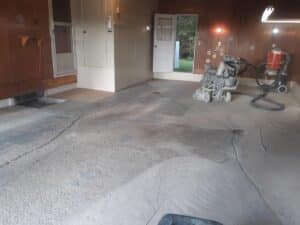
- Concrete Prep – Grinding and opening the surface for better bonding.
- Moisture Testing – Ensuring the floor is completely dry and ready.
- Crack Repair – Fixing imperfections and smoothing damaged areas.
- Coating Application – Applying two coats: a polyurea base, then a polyaspartic top.
- One Day Turnaround – Your basement floor is back in action within 24-48 hours!
Choosing the Right Coating: A Long-Term Investment
Whether you’re finishing a basement gym, upgrading your storage area, or creating a nice usable living space, the best basement concrete coating is one that protects, looks great, and lasts. Unlike paint or cheap acrylic coatings, our polyurea systems handle heavy foot traffic, resist stains, and deliver a durable finish built for real-world use.
Polyurea and polyaspartic systems are widely regarded as the best concrete coatings for long-term durability, moisture tolerance, and low-maintenance living. Making an informed decision today could save you from costly repairs and resurfacing down the road.
Ready to make an informed decision? At Dream Floors Concrete Coatings, we use only the best concrete coatings for basement applications in Albany and beyond — polyurea and polyaspartic systems that outperform epoxy coatings in almost every way.
If you’re in Albany, Syracuse, or anywhere nearby, get in touch for a free quote. Let’s turn your basement floor into something beautiful, strong, dependable, and easy to clean.
Frequently Asked Questions About Basement Floor Coatings
What’s the Best Coating for a Basement Floor?
When homeowners ask about the best basement floor coatings, they’re usually trying to avoid peeling paint, trapped moisture, or an epoxy floor that looks good for a year and then starts failing. The best coating for a basement floor is one that can tolerate moisture, bond aggressively to concrete basement floors, and flex slightly as temperature changes occur. That’s why polyurea base coats paired with a polyaspartic protective topcoat outperform most epoxy floor coatings, water based paint, or DIY kits used in a basement flooring project.
What Is the Best Finish for a Basement Floor?
The best finish for a basement floor balances durability, appearance, and slip resistance. A smooth finish with decorative flakes sealed under an extra layer of clear topcoat improves the floor’s appearance while resisting stains, scratches, chemical spills, and everyday wear. This type of floor coating works well in laundry rooms, storage areas, and home gyms where foot traffic is steady but moisture is always a concern.
What’s the Best Flooring to Put Over Concrete in a Basement?
Many homeowners consider vinyl planks, tile, or carpet over concrete floors, but these options can trap moisture and lead to mold or water intrusion issues. A professionally installed floor coating applied directly to concrete basement floors creates a waterproof, seamless surface that seals the slab instead of covering it up. This approach is often the most durable and low-maintenance way to transform your basement without worrying about hidden moisture problems.
What’s the Average Cost to Epoxy a Basement Floor?
The cost to epoxy a basement floor is typically measured per square foot and varies based on surface condition, moisture issues, and prep requirements. DIY epoxy floors may appear cheaper upfront, but failed adhesion, peeling, or stains often lead to redoing the entire project. Professional installation costs more initially, but delivers better durability, good coverage, and a longer-lasting floor that won’t require frequent repairs.
Read more in our blog post about costs to epoxy a floor.
Paint, Epoxy, and Coatings: Why Basements Are Different
Many basement flooring projects fail because homeowners treat basement floors like garage floors. Basement concrete floors face unique challenges: constant humidity, cold slabs, and moisture moving up through the concrete. Paint and water based epoxy coatings struggle to handle these conditions, especially when old paint is still present or the surface wasn’t properly etched, vacuumed, and sealed.
Epoxy creates a rigid shell over concrete. When moisture builds underneath, that chemical reaction can cause bubbling, peeling, or cracking. Opening windows during application may reduce odor, but it doesn’t fix moisture issues inside the slab. This is why epoxy systems and DIY kits often fail in basements even when applied carefully.
How Professional Installation Prevents Coating Failure
Professional installation isn’t just about speed, it’s about controlling the variables that cause basement floor coatings to fail. This includes verifying moisture levels with a moisture test, repairing cracks, removing thin layers of old paint, and preparing the surface so the first coat bonds correctly.
A professionally installed system uses two coats or more, ensuring the floor is fully covered and sealed. The result is a durable finish that resists stains, grease, dirt, spills, scratches, and wear from heavy use. This process is especially important in basements used as laundry rooms, home gyms, or finished living space where durability and appearance both matter.
How the Right Coating Can Transform Your Basement
A well-installed basement floor coating helps transform your basement into usable space. Whether you’re creating storage, a workout area, or additional living space, the right floor coating improves durability, simplifies cleaning, and enhances aesthetic appeal.
By sealing the concrete slab, preventing water intrusion, and resisting stains and moisture, a high-quality coating allows you to transform your basement with confidence. Instead of worrying about peeling paint or slippery surfaces, you get a smooth, durable floor built specifically for basement conditions.